Sample Letter of Invitation for Visit Visa (B-2 & Tourist)

If you're preparing to apply for a US B-2 visitor visa or a tourist visa for another country and you need a sample letter of invitation, you're looking at one of the most effective ways to demonstrate that your trip has a clear purpose, a confirmed host, and a planned return home. You don't need to hire anyone to write this letter, and you don't need to guess at the format. This guide walks you through the required sections, gives you a ready-to-use template you can adapt to your own situation, and explains the specific mistakes that trigger delays or refusals at consular interviews. 

Key Takeaways

  • A sample letter of invitation for a visit visa is not legally required for most B-2 or tourist visa applications, but consular officers routinely use it to verify trip context, accommodation arrangements, and the visitor's intent to return home after the authorized stay ends.

  • Every invitation letter must state exact arrival and departure dates, the full relationship between host and visitor, complete accommodation address including unit number and ZIP code, and any financial support being offered—vague or incomplete details raise immediate red flags during the interview.

  • The letter must align perfectly with the DS-160 form, flight itinerary, hotel reservation, and any other supporting documents submitted with the visa application—even a one-day date mismatch or a city name that appears in the letter but not on the hotel booking can trigger additional scrutiny or a request for corrected documentation.

  • In 2024, the US issued 8.5 million B-1/B-2 visitor visas out of 11.5 million total nonimmigrant visas, making the competition for approval very real. A well-prepared invitation letter that provides concrete, verifiable detail can tip the decision toward approval when the rest of the application is solid.

  • Get Itinerary generates pre-populated invitation letter templates based on the flight itinerary and hotel reservation you order ($25 for both documents, delivered within minutes), ensuring every date, address, and trip detail is accurate from the start—no manual cross-checking required. The QR-verified records stay active for the entire visa processing period, not just 48 hours like PNR-based competitor documents.

What Is a Sample Letter of Invitation for Visit Visa?

A letter of invitation for a visitor visa is a formal document written by a host—a family member, friend, or business contact who lives in the destination country. It explains who the visitor is, why they are coming, when they plan to arrive and leave, and where they will stay during the trip.

The letter supports a visa application by giving the consulate concrete evidence that the trip is genuine, limited in duration, and well planned. It confirms the host's identity, legal status in the destination country, and relationship to the visitor.

It also helps consular officers assess whether the applicant has stable ties to their home country and intends to return after the visit ends. When a US consular officer interviews a B-2 applicant from India whose mother lives in New Jersey, the invitation letter answers three questions before they're asked: who is waiting for the visitor, where exactly they will stay, and when they plan to leave.

An invitation letter is not legally binding and does not guarantee visa approval. The applicant must still qualify on their own merits: employment history, financial strength, family ties at home, and credible intent to return. But when the rest of the application is solid, a clear, factual invitation letter can provide the additional context that tips the decision toward approval.

When Do You Need a Sample Letter of Invitation for Visit Visa?

Invitation letters are strongly recommended but often not formally required. For US B-2 visitor visas, the Department of State does not list them as a mandatory document, yet consular officers frequently find them useful as supplementary evidence of trip purpose and accommodation plans.

Common situations where a sample letter of invitation for visit visa adds real value:

  • A family member visiting parents, siblings, or children living abroad

  • Attending a specific event—a graduation ceremony, wedding, religious celebration, or cultural festival

  • Tourism where the visitor stays at the host's home instead of booking a hotel

  • Trips involving medical treatment or consultations arranged by a host in the destination country

  • Short business meetings combined with personal travel, where the host is also providing accommodation

Invitation letters are used for US B-2 visas, UK Standard Visitor visas, Schengen Type C short-stay tourist visas (France, Germany, Italy, Spain, and other member states), Canadian visitor visas, Australian visitor visas, and many others. Even travelers from Visa Waiver Program countries can carry one as supporting evidence at the port of entry if questioned by immigration officers.

The key rule: every detail in the invitation letter must match the DS-160 form (for US visas), the online visa application, the flight itinerary, the hotel reservation, and any other supporting documents. When I reviewed visa refusal cases with a former consular officer in 2023, she pointed to a stack of applications where mismatched dates—arrival listed as June 10 in the DS-160 but June 12 in the invitation letter—triggered immediate requests for clarification and delayed approvals by weeks.

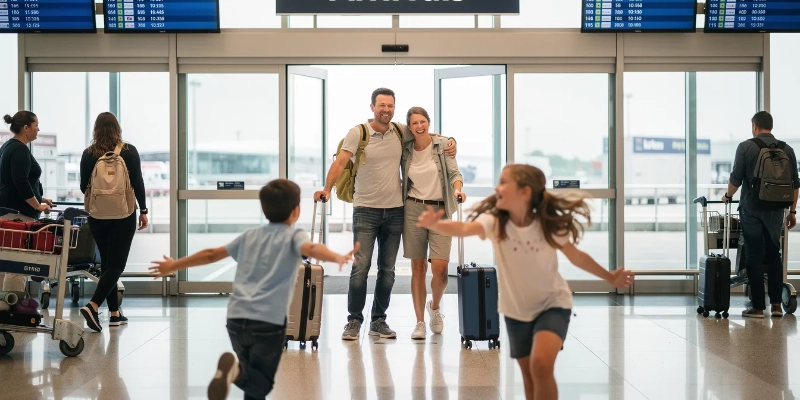
A joyful family reunion at an airport arrivals gate, where a mother embraces her adult son after months apart—the kind of visit that often requires a clear invitation letter for a B-2 visitor visa application to demonstrate trip purpose and intent to return home

How to Write an Effective Sample Letter of Invitation for Visit Visa

A clear structure makes writing invitation letters much easier and reduces the risk of missing critical information that consular officers look for. The sections below walk you through host details, visitor details, trip description, financial support, and the closing—each with a checklist of what to include.

Use concrete dates (for example, "June 15, 2026 to July 5, 2026") and real addresses—never vague time frames like "early summer" or partial addresses. Consular officers need to verify that your trip plan is realistic and that you intend to return home by a specific date.

Section 1: Host Information

The host section establishes your identity, legal status, and credibility. Consular officers use this information to verify that you are lawfully present in the destination country and capable of supporting the visitor if you have promised to do so.

Include the following details:

  • Full legal name exactly as it appears on your passport or government-issued ID

  • Complete residential address: street number, apartment or unit, city, state or province, ZIP or postal code

  • Phone number (with country code if the host is abroad) and email address

  • Immigration status: US citizen, lawful permanent resident (green card holder), temporary worker (H-1B, L-1), student (F-1), or other valid status

  • Current occupation, employer or university name, and length of employment or enrollment

  • How long you have lived at your current address—this helps demonstrate stability

The date at the top of the letter should reflect when you actually sign it, not a placeholder date. Consular officers sometimes check whether the letter was written recently or months before the application—letters written too far in advance can seem generic or outdated.

Section 2: Visitor Information

This section connects the visa applicant to the host and to the specific trip. It helps the consular officer verify that the person being invited is the same person who submitted the DS-160 form and that the relationship is genuine.

Include these details:

  • Visitor's full legal name exactly as it appears on their passport

  • Date of birth

  • Passport number (the form may reference this as "passport no")

  • Nationality and full home country address

  • Relationship to the host, stated clearly and specifically: "my mother," "my younger brother," "a close family friend I have known for 15 years," "my business partner since 2018"

If you know which US embassy or consulate the visitor will attend for their visa interview—such as the US Embassy in Mumbai, the US Consulate General in London, or the US Embassy in Mexico City—you can note it in the opening sentence. This is not required, but it shows attention to detail.

Add one or two sentences about the visitor's ties to their home country. These are the factors consular officers weigh most heavily when assessing intent to return: current employment with a named employer, enrollment in a university program with a specific end date, family members (spouse, children, elderly parents) remaining at home, property ownership, or business ownership. The stronger and more specific these ties, the better.

Section 3: Purpose and Dates of the Visit

Consular officers focus heavily on trip purpose and duration. Vague statements like "just to visit" or "to spend time together" do not provide enough context. You need to explain what the visitor will do during the trip and why they are coming at this specific time.

State the visitor's planned arrival and departure dates explicitly, using the exact format that appears on the flight itinerary: "from August 10, 2026, to August 30, 2026" or "arriving June 15, 2026, and departing July 5, 2026."

Explain the purpose of the visit clearly in one or two sentences:

  • Tourism: visiting national parks, museums, and cultural sites in New York, Washington DC, and Boston

  • Family event: attending my daughter's graduation ceremony at Stanford University on June 20, 2026

  • Medical treatment: accompanying the visitor to a scheduled consultation at Johns Hopkins Hospital on July 10, 2026

  • Business meeting: attending a two-day trade conference in Chicago and meeting with potential partners

Mention key planned activities briefly—do not write a day-by-day itinerary in the letter, but name specific cities, landmarks, or events that give the trip shape and credibility. The itinerary should be realistic: a three-week coast-to-coast road trip is plausible; claiming to visit 15 cities in 10 days raises questions.

When Sarah invited her mother from Mumbai for her Columbia University graduation in 2023, the consular officer at the US Embassy in Mumbai asked three specific questions during the interview: what date is the ceremony, where will your mother stay before and after the event, and when does she plan to return to India. Sarah's mother answered all three questions by reading directly from the invitation letter—the ceremony date matched the university's published commencement schedule, the accommodation address matched the hotel reservation, and the return date matched the flight itinerary. The visa was approved on the spot.

Section 4: Accommodation and Financial Support

Consular officers need to verify that the visitor has a confirmed place to stay and the financial means to support themselves during the trip. This section clarifies who is paying for what and where the visitor will be living.

State clearly where the visitor will stay, with the full address:

  • If staying at your home: "My father will stay at my residence at 450 West 34th Street, Apartment 12B, New York, NY 10001, for the entire duration of his visit."

  • If staying at a hotel: "My sister will stay at the Hilton Garden Inn, 1114 6th Avenue, New York, NY 10036, from June 15 to June 22, 2026, and then at my home for the remainder of her visit."

If you will financially support the visitor, specify exactly which expenses you will cover: housing, food, local transportation, domestic flights, entertainment, or all of the above. Vague promises like "I will help with expenses" do not provide enough clarity.

Attach supporting documents if you are offering financial support:

  • Recent bank statements (last three months) showing sufficient funds to cover the promised expenses

  • Pay slips or employment verification letter demonstrating stable income

  • For US B-2 visas, Form I-134 (Affidavit of Support) can be included if you are covering all or most costs—though it is not required for tourist visas, it adds credibility when financial support is substantial

If the visitor is self-funded, the letter should say so directly: "My cousin will cover all her own travel, accommodation, and living expenses during the visit. She has enclosed her own bank statements and employment letter as proof of financial capability."

Consular officers are looking for evidence that the visitor will not overstay, work illegally, or become a financial burden. A clear statement of financial responsibility—whether from the host or the visitor—addresses that concern head-on.

Section 5: Intent to Return and Closing

Every visitor visa is a temporary visa. Consular officers must be convinced that the applicant intends to return home by the end of the authorized stay. This section reinforces that intent with specific evidence.

Include one or two sentences confirming the visitor's plan to return home by the stated departure date. Reference the specific ties that will pull them back:

  • "My mother will return to London no later than July 2, 2026. She owns her home at the address listed above, and her husband and two adult children remain in the UK."

  • "My brother will return to Mumbai on August 30, 2026, to resume his position as senior accountant at Tata Consultancy Services, where he has been employed since 2019."

  • "My friend will return to Toronto on September 15, 2026, as she is currently enrolled full-time in a Master's program at the University of Toronto, with classes resuming on September 20."

Close the letter with a polite, professional sign-off. Avoid overly emotional language—consular officers respond to clarity and factual evidence, not sentiment.

Standard closing format:

  • "Thank you for your time and consideration of this application. Please feel free to contact me at the phone number or email address above if you require any additional information."

  • "Sincerely," or "Respectfully," followed by your handwritten signature

  • Your printed full name, complete address, phone number, and email address below the signature

The host must sign and date the letter by hand for it to be valid. An unsigned letter or a letter with only a typed name will not carry the same weight at the consular interview.

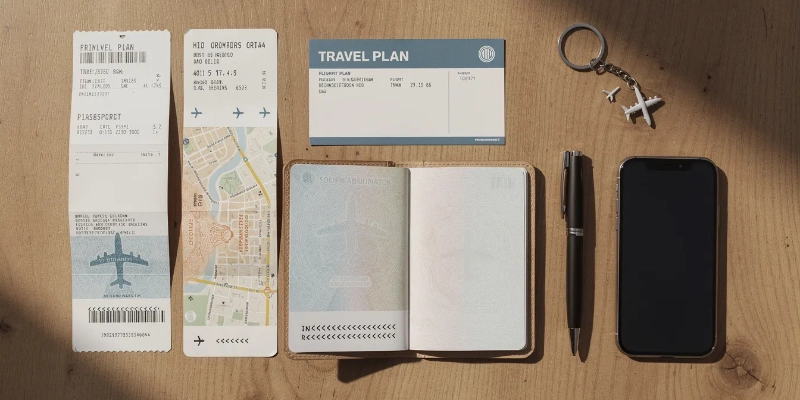
A neat arrangement of a passport, visa application forms, flight itinerary printout, and hotel reservation confirmation on a wooden desk—demonstrating the organized document package required for a successful B-2 visitor visa application that includes a sample invitation letter

Sample Letter of Invitation for Visit Visa (US B-2 Tourist Visa Template)

Below is a complete example you can adapt to your own situation. Do not copy this letter verbatim—consular officers can recognize generic templates. Customize every detail to reflect your actual trip, relationship, and circumstances.


June 5, 2026

The Consul General
U.S. Embassy London
33 Nine Elms Lane
London, SW11 7US
United Kingdom

Subject: Invitation Letter for B-2 Visitor Visa – Michael A. Johnson

Dear Honorable Consul,

My name is Emma Louise Johnson. I am a United States citizen residing at 450 West 34th Street, Apartment 12B, New York, NY 10001. My date of birth is March 14, 1990. I work as a senior software engineer at TechNova Inc., 200 Park Avenue, New York, NY 10166, where I have been employed for four years. My phone number is +1 (212) 555-0198, and my email address is emma.johnson@email.com.

I am writing to invite my father, Michael Anthony Johnson, to visit me in the United States for tourism and family time. His date of birth is November 2, 1958, and his passport number is 987654321, issued by the United Kingdom. He resides at 18 Kensington Road, London, W8 4PL, United Kingdom. My father is a retired secondary school history teacher and owns his home at the address listed above. He has lived in London for over 30 years.

I would like to invite him to visit from June 10, 2026, to July 2, 2026. During his three-week stay, we plan to visit landmarks in New York City, including the Metropolitan Museum of Art and the Statue of Liberty, travel to Washington, D.C., to tour the Smithsonian museums, and attend my cousin Sarah Johnson's graduation ceremony at Columbia University on June 20, 2026. My father has not visited the United States in over five years, and this trip will give us the opportunity to spend time together and celebrate our family milestone.

My father will stay at my home at the address listed above for the entire duration of his visit. I will financially support him during his stay and cover all expenses, including housing, food, local transportation, and domestic travel between New York and Washington. I have enclosed my recent bank statements for the past three months and my most recent pay slips as evidence of my financial capability to support his visit.

My father has strong ties to the United Kingdom. He owns his home in London, where he has lived since 1995. His wife, my mother, will remain in London during his visit, as will his younger brother and extended family. He receives a pension from the London Borough of Hammersmith and Fulham and is an active member of his local community association. He intends to return to London no later than July 2, 2026, well before any visa expiration.

Thank you for your time and consideration of this application. I am happy to provide any additional information or documentation you may require. Please do not hesitate to contact me at the phone number or email address above.

Sincerely,

[Handwritten Signature]

Emma Louise Johnson
450 West 34th Street, Apartment 12B
New York, NY 10001
Phone: +1 (212) 555-0198
Email: emma.johnson@email.com


Use this sample as a starting point, but adapt every detail to your own situation. Change the names, dates, addresses, relationship, trip purpose, and financial arrangements to reflect your actual circumstances. Consular officers review hundreds of applications each week—they can recognize a generic template that has not been customized, and it weakens your credibility.

Common Mistakes That Weaken Invitation Letters for Tourist Visas

These are the most frequent errors that lead to delays, requests for additional documentation, or visa refusals:

  • Inconsistent dates across documents: The arrival or departure date in the invitation letter differs from the DS-160 form, flight itinerary, or hotel reservation by even one day. Consular officers flag these discrepancies immediately. In a 2024 review of delayed UK Standard Visitor visa applications, the UK Visas and Immigration team found that 38% of requests for additional documentation involved date mismatches between the invitation letter and the flight itinerary.

  • Vague trip purpose: Writing "just to visit" or "for tourism" without specifying what the visitor will actually do—tour specific cities, attend a named event, visit family—makes the trip seem unplanned or invented. When a consular officer asks "What will your mother do during her stay?" and the applicant cannot answer with concrete activities that match the invitation letter, the application moves to the "additional review" pile.

  • Unclear or unverifiable relationship: Stating "friend" without explaining how you know the person, for how long, or in what context. Consular officers need to assess whether the relationship is genuine. If you met through work, say so. If you've known each other since university, include that detail.

  • Missing host immigration status: Failing to state whether you are a US citizen, green card holder, temporary worker, or student. Your legal status in the destination country directly affects your credibility as a host. A host on an H-1B visa has different long-term stability than a host on a tourist visa themselves.

  • Vague financial support language: Promising to "help with expenses" or "provide support" without specifying which costs you will cover or attaching a bank statement. Consular officers need concrete evidence, not vague assurances. If you say "I will cover all accommodation and food expenses," your bank statement should show enough funds to do so.

  • Incomplete accommodation information: Saying "the visitor will stay with me" but not providing your full street address, apartment number, city, state, and ZIP code. Consular officers sometimes verify accommodation addresses against public records—a generic "New York, NY" is not verifiable.

  • No evidence of intent to return: Failing to mention the visitor's ties to their home country—employment, property ownership, family remaining behind, school enrollment—or a firm end date for the trip. The most common reason for B-2 visa refusals under Section 214(b) of the Immigration and Nationality Act is failure to demonstrate nonimmigrant intent. The invitation letter is your chance to address that concern directly.

  • Using a generic template without customization: Consular officers can easily detect a sample letter that has not been adapted to the actual trip. Generic language like "we have known each other for many years" or "we plan to visit various places" does not provide the specific, verifiable detail they are looking for.

  • Mismatched names or passport numbers: The visitor's name or passport number in the invitation letter does not match the DS-160 form or passport copy submitted with the application. This is a fast path to a request for corrected documentation and a delayed decision.

Before you submit your visa application, cross-check every date, address, name, and passport number in the invitation letter against the DS-160 form, flight itinerary, and hotel reservation. Even small inconsistencies raise red flags at the consular interview—and they are entirely preventable with 10 minutes of careful review.

How Get Itinerary Simplifies the Sample Letter of Invitation for Visit Visa Process

Get Itinerary specializes in generating the supporting documents you need for visa applications—not just flight itineraries and hotel reservations, but also pre-populated invitation letter templates that match those documents exactly.

When you order a combined package (flight itinerary + hotel reservation for $25, delivered within minutes), Get Itinerary can generate an invitation letter template that automatically fills in the visitor's name, passport number, arrival and departure dates, flight route, and hotel address. You receive a document where the core visa information is already correct—no manual cross-checking required.

You can then customize the letter to add personal details: your relationship to the visitor, the specific purpose of the trip (attending a graduation, touring national parks, visiting family), and any financial support you are offering. The result is a professional, accurate invitation letter that aligns perfectly with the rest of your visa application package.

Blog  

Sample Letter of Invitation for Visit Visa (B-2 & Tourist)

© 2026 Get Itinerary