Visa in Europe: Schengen Visa, ETIAS, and New Entry Rules Explained (2026)
Planning a trip to Europe means navigating a web of visa rules, digital border systems, and country-specific entry requirements that are dependent on your passport, your destination, and the duration of your trip. Those rules and systems have recently undergone some significant changes. Here is everything that is changing when it comes to entry to Europe or the Schengen region, especially with the new European Entry/Exit System (EES) and the upcoming European Travel Information and Authorization System (ETIAS).
Key Takeaways
-
Most short trips to the Schengen Area are limited to 90 days in any rolling 180-day period, and rules differ for non-Schengen EU countries like Ireland and Cyprus.
-
From 12 October 2025, the EU Entry/Exit System (EES) began rolling out for non-EU nationals, replacing passport stamping with biometric registration including fingerprints and a facial image.
-
ETIAS, the European Travel Information and Authorization System, was previously expected to launch in late 2026, but the EU officially dropped that target in 2026. The current estimate is sometime in 2027, with the exact date still unconfirmed. Check the official ETIAS site before booking travel that depends on it.
-
Depending on nationality and travel purpose, travelers will either need a Schengen visa or an ETIAS authorization for short stays.
-
Get Itinerary has been providing detailed, consulate-ready visa travel itineraries for several years with a near-perfect success rate, helping travelers avoid refusals and border issues.
Overview of Europe's Visa and Entry Systems
When people search for "visa in Europe," they usually mean the Schengen visa. But the landscape now includes the Entry/Exit System (EES) and the upcoming ETIAS travel information and authorization system.
The Schengen Area and the European Union are not the same thing. Some EU countries like Ireland and Cyprus sit outside Schengen, while Schengen countries such as Norway and Switzerland are not in the EU.
Common traveler scenarios map to different requirements:
-
Tourism or business under 90 days (visa-exempt passport): No visa is required for short stays in the Schengen Area; ETIAS will be needed once live.
-
Tourism or business under 90 days (visa-required passport): Schengen visa required.
-
Visiting family members with EU citizenship: Free-movement rules may apply with additional documents.
-
Long stays, work, or study: National long-stay visa or residence permit required.
Rules here are current as of mid-2026, but always verify the latest entry requirements with official government sources before departure. For travelers who need a visa, Get Itinerary provides compliant flight and hotel itineraries accepted by consulates worldwide.
What Is the Schengen Area?
The Schengen Area includes 29 European countries that have abolished internal border control for most travel. Once you legally enter the zone, say, arriving in France, you can travel on to Italy, Spain, Norway, or any other member without additional passport checks.
Well-known Schengen countries include Germany, the Netherlands, Greece, Portugal, Switzerland, Sweden, Austria, Belgium, Poland, and the Czech Republic. As of 1 January 2025, Bulgaria and Romania became full members after lifting land borders.
The unified 90-day rule in any 180-day period applies across the entire area cumulatively, not per country, a detail that surprises many first-time visitors.
Schengen Visa Basics
A Schengen visa is a short-stay visa that allows non-EU/non-Schengen nationals who need a visa to visit the area for up to 90 days in a rolling 180-day window. It covers tourism, business meetings, family visits, and short courses, but is different from national long-stay visas for work or study.
Categories include single-entry, double-entry, and multiple-entry. Even a multi-year multiple-entry visa still limits actual stay to 90 days per 180-day period. An airport transit visa also exists for certain nationalities who are only changing planes at a Schengen airport without entering the territory. Eligibility for transit exemptions is nationality-specific.
Who Needs a Schengen Visa and Who Is Visa-Exempt?
Your passport determines whether you need a visa. Visa requirements depend on nationality and the specific country of visit in Europe, and the EU maintains official lists of visa-required and visa-exempt nations.
Visa-exempt examples: citizens of the United States, Canada, Japan, Australia, the United Kingdom, and South Korea can currently visit for short tourism or business stays without a visa.
Visa-required examples: citizens of India, China, South Africa, Nigeria, Pakistan, and the Philippines generally must apply for a Schengen visa.
Specific exemptions exist for family members of EU/EEA citizens under free-movement rules and for diplomats, though they must prove their status with travel documents. Travelers from visa-required countries will not use ETIAS; they must continue the visa application process. ETIAS is only for those who are currently exempt.
The 90/180-Day Rule Explained
Travelers can stay up to 90 days in 180 days across all Schengen countries combined. The 180-day period for stays is rolling, meaning you count backward 180 days from your planned date of departure and total every day spent inside any Schengen country.
Example: A traveler enters Spain on 1 March, spends 30 days there, moves to Italy for 25 days, then visits France for 25 days. By late April, they have used 80 of their 90 days and must plan their exit carefully.
Use the official EU short-stay calculator to check your allowance. Consequences of overstaying include fines, entry bans, and refusal of future visas, especially now that EES will log every arrival and departure electronically.
EU Entry/Exit System (EES): What Changes in 2025–2026
The Entry/Exit System launches on October 12, 2025, progressively replacing passport stamping with electronic recordings across all 29 Schengen external borders. Full deployment is expected by April 2026.
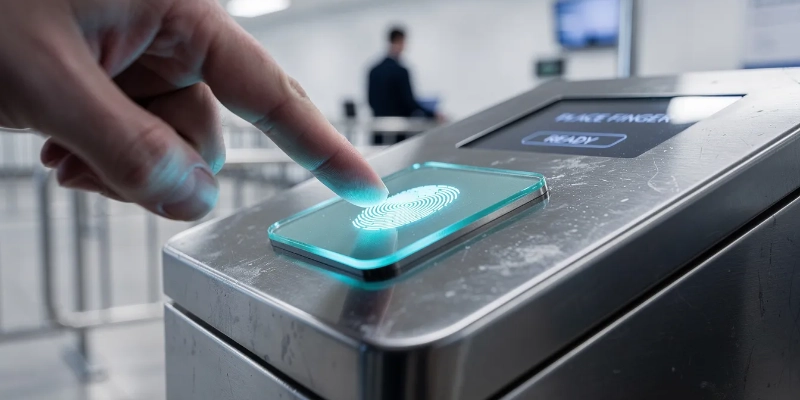
EES tracks travelers entering and exiting 29 EU countries for short stays. On first entry, border guards collect biometric data like fingerprints and facial images along with passport details. EES collects this data for both visa holders and visa-exempt visitors. Travelers will undergo additional border control processes under EES, so expect longer queues at land crossings and airport borders during the initial rollout months.
The system does not apply in Ireland, which maintains separate rules, and Cyprus may continue manual stamping during its transitional phase. The goal is improved security, automated overstay detection, and faster border checks long-term.
ETIAS: European Travel Information and Authorization System (2026)
ETIAS was previously expected to launch in late 2026, but the EU officially dropped that target in 2026. The current estimate is sometime in 2027, with the exact date still unconfirmed. It is not a visa-it is a digital authorization linked to your passport for short trips of up to 90 days within a 180-day period. Once mandatory, citizens of roughly 60 eligible countries (including the US, UK, Canada, Australia, and Japan) must obtain an ETIAS authorization before boarding flights to Schengen countries.
ETIAS is valid for three years or until passport expiration, whichever comes first, and can be used for multiple trips. Official ETIAS information and the only legitimate ETIAS application portal will be hosted on the official ETIAS website (a europa.eu domain). Be cautious of non-official commercial sites charging inflated fees.
ETIAS Application: What Travelers Will Need
The etias application will be fully online. Travelers submit a valid biometric passport, contact details, European travel information, answers to security and health questions, and basic trip details such as their first intended Schengen country of entry.
Key details:
|
Item |
Detail |
|---|---|
|
Application fee |
€20 for travelers aged 18 to 70 |
|
Fee exemptions |
Children under 18 and adults over 70 (must still submit an application) |
|
Processing time |
Minutes to 96 hours; rarely longer if additional information or an interview is requested |
|
Validity |
Up to 3 years or passport expiry |
ETIAS allows stays of up to 90 days within a 180-day period. Travelers without a valid ETIAS after the system becomes mandatory may be denied boarding or refused entry at the border, so apply several days before departure.
Entry Requirements Across EU and Schengen Countries
Beyond visas and ETIAS, all travelers must meet basic entry requirements: a valid passport (many Schengen countries require at least three months' validity beyond your departure date), proof of return or onward flights, and evidence of sufficient funds.
Border authorities may request proof of accommodation, travel medical insurance covering at least €30,000, a photo for records, and a clear purpose of stay. Non-Schengen countries have unique entry rules compared to Schengen countries. Ireland and Cyprus, for example, maintain their own insurance expectations and financial proof thresholds. Always verify on the relevant embassy or consulate page for every country you plan to visit.
When You May Need a Visa Instead of ETIAS
ETIAS covers only short visits, tourism, business, transit, or visiting family members, up to 90 days. It does not replace national visas for work, long-term study, or residence. Travelers must apply for a National Long-Stay Visa if staying longer than 90 days.
Situations requiring a national visa include paid employment in Germany, a multi-year degree in France, or relocating to Spain. Even for short stays, some nationalities always need a Schengen visa regardless of purpose-for example, Indian citizens visiting Italy for tourism must apply for a visa, not ETIAS. Begin long-stay visa processes several months in advance, as many consulates have limited appointment availability.
Special Cases: UK, Ireland, Cyprus, Cruises, and Transit
Countries like the UK are outside the Schengen Area and have unique entry requirements, including their own Electronic Travel Authorization system entirely separate from ETIAS and EES.
Ireland maintains a separate border and visa policy outside of ETIAS. Some travelers may be visa-free for Ireland but visa-required for the Schengen. Cyprus, an EU member outside Schengen, allows many nationalities visa-free for up to 90 days, and stays there do not count against the Schengen 90/180 limit.
For cruises, EES checks apply when passengers disembark at Schengen ports. Some travelers also need an airport transit visa merely to change planes at a Schengen airport, even without passing through regular border control, depending on nationality.
Understanding Visa Processing Times, Costs, and Refusals
|
Category |
Cost |
|---|---|
|
Standard adult fee |
~€90 |
|
Children aged 6–12 |
~€40 |
|
Children under 6 |
Generally free |
Processing typically takes up to 15 calendar days from biometrics, extending to 45 days in busy periods. Family members of EU/EEA citizens often benefit from free or accelerated processing under free-movement rules with proper documents.
Common refusal reasons include insufficient documentation, doubts about the purpose of travel, weak ties to the home country, inconsistent itineraries, or previous overstays. If refused, read the refusal form carefully-it lists reasons and appeal options. Correcting issues like unclear itineraries or missing hotel bookings can make a reapplication successful.
Why Travellers Choose Get Itinerary for Schengen Visa Documentation
You need proof of travel plans for your visa application, but you don't want to buy non-refundable tickets before approval. Get Itinerary bridges that gap with QR-verified flight itineraries and hotel reservations designed specifically for visa processing.
Here's what sets us apart. Most PNR-based services give you a booking reference that expires in 24–72 hours — often before your visa appointment even happens. Our documents include a QR code that links to a live reservation portal, staying active until 24 hours before your stated travel date. That means your consular officer can verify your itinerary throughout the entire processing window.
A flight itinerary costs $15. A hotel reservation costs $15. Both together cost $25. Additional travellers add $10–$20 depending on the document type. You'll receive your QR-verified documentation within minutes of ordering.
One critical detail: these are documentary proofs for visa applications only. They are NOT confirmed bookings. You cannot use them to board a flight or check into a hotel. Once your Schengen visa is approved, you book your actual travel arrangements. Until then, you have verifiable documentation that satisfies consular requirements without financial risk.
Since 2018, we've helped tens of thousands of travellers navigate Schengen visa requirements, ETIAS preparations, and onward travel documentation for over 30 countries. The process works because embassies recognize what they're looking at — proof of intent, not a gamble on approval.
FAQ
Do I need both a Schengen visa and ETIAS to visit Europe?
No. If your nationality requires a Schengen visa, you continue applying for that visa and will not use ETIAS. If you are currently visa-exempt, you will eventually need an ETIAS authorization instead of a visa for short stays once the authorization system becomes mandatory.
If I visit the UK and then the Schengen Area, does my time in the UK count toward the 90/180-day rule?
Time spent in the UK does not count toward the Schengen 90/180-day limit. Each jurisdiction-UK, Schengen, Ireland, Cyprus-tracks stays separately, so monitor each set of rules independently.
Can I work remotely for a non-European employer while in the Schengen Area as a tourist?
In many cases, limited remote work for a foreign employer is tolerated during a short stay, but local regulations differ. Some states now offer separate digital nomad visas. Do not assume long-term remote work is permitted on a simple Schengen tourist visa.
How far in advance should I apply for ETIAS once it is live?
Apply at least several days to a few weeks before departure. While ETIAS applications are processed within minutes to 96 hours, manual review or requests for additional documents can cause delays that affect boarding or entry.
What happens if I accidentally overstay by a few days in the Schengen Area?
Even a short overstay can be taken seriously. Border authorities may issue a fine, record the overstay in EES, or impose a re-entry ban in repeated cases. If you realize you may overstay, contact local immigration authorities before your planned exit and keep proof of any exceptional circumstances.