Questions for B1 B2 Visa Interview: What to Expect and How to Prepare
If you're preparing for a B1 B2 visa interview, you already know the stakes are high. The consular officer will ask you direct questions about your travel plans, finances, employment, and ties to your home country — and you'll have five to ten minutes to prove you deserve the visa. This article walks you through the exact b1 b2 visa interview questions you'll face, organized by category, with specific answers that work. If you're looking for more general interview questions, refer to our article here Top 10 Visa Interview Questions and Best Answers.
Key Takeaways
-
Most B1 B2 visa interview questions fall into predictable categories: travel purpose, financial situation, employment, home country ties, and previous travel history. You can prepare for all of them in advance.
-
Interviews typically last five to ten minutes. Your answers must be clear, truthful, and consistent with your DS-160 form. There's no time for long explanations.
-
Consular officers focus heavily on non-immigrant intent. They need to believe you'll return to your home country after a temporary visit. Weak ties, inconsistent answers, or insufficient financial evidence are the most common reasons for refusal under section 214(b).
-
Strong proof of return — stable employment, property ownership, dependent family members, or ongoing education — dramatically increases your chances of approval.
-
Get Itinerary provides QR-verified flight itineraries and hotel reservations ($15 each, $25 combined, delivered within minutes) that give you specific dates, cities, and costs to reference during your interview. The QR code links to a live reservation portal that stays active until 24 hours before your travel date — unlike PNR-based competitor documents that expire in 24–72 hours.
How B1 B2 Visa Interview Questions Work in 2026
The B1/B2 visa is a combined non-immigrant visa covering both business activities (B-1) and tourism, family visits, or medical treatment (B-2). It's the most commonly issued visitor visa for people entering the United States temporarily. The visa interview is the single most important step in the entire application process. No matter how strong your paperwork looks, the consular officer makes the final decision based on what you say and show during that brief conversation.
Officers assess whether your visit is temporary and legitimate. They're looking for concrete evidence that you'll return home when your trip ends. The interview confirms your trip aligns with permitted B-2 activities — tourism, visiting family, attending a business meeting, or seeking medical treatment.
This article focuses on the concrete, category-by-category questions applicants actually face in 2026. We'll show you what officers expect, how to structure your answers, and what documentation supports each response.
Core Categories of B1 B2 Visa Interview Questions
Most visa interview questions fall into a small number of predictable categories. Officers evaluate your travel purpose and your intent to return home. You need to prepare for all of them.
Here are the main categories:
-
Travel purpose and detailed plans
-
Travel duration, dates, and length of stay
-
Financial situation and proof of funds
-
Employment, study status, and ties to your home country
-
Family members and U.S. contacts
-
Previous travel history and immigration history
-
Special cases: medical treatment, business conferences, or combined trips
The rest of this article walks through each category with example questions and answers officers expect. B-2 visa applicants must demonstrate non-immigrant intent in every category.
Travel Purpose & Detailed Plans
This is almost always the first topic in any B1, B2, or combined B1/B2 visa interview. Officers want a specific, time-bounded reason for your trip — not a vague answer like "just tourism." You need a clear travel plan with dates and cities.
Expect questions like:
-
"What is the exact purpose of your trip?"
-
"Which cities will you visit?"
-
"Why did you choose the United States instead of another country?"
-
"Where will you be staying?"
For pure tourism, a strong answer sounds like: "I plan to visit New York, Washington D.C., and Boston over 10 days. I want to see the Statue of Liberty, the Smithsonian museums, and walk the Freedom Trail." For visiting family, mention the specific event: "My cousin is graduating from the University of Illinois on June 15, and I want to attend the ceremony."
If you're traveling for medical treatment, mention the type of treatment, expected duration, hospital name, and why you're seeking the treatment in the U.S. rather than at home.
Your answer must match your DS-160 entry. Include approximate dates and locations. Show that the visit is clearly temporary.
Travel Duration, Dates & Length of Stay
Officers care about precise duration because clear statements help establish intent to return. Vague answers like "two to three weeks, maybe" immediately raise red flags.
Typical questions include:
-
"How long will you stay?"
-
"What are your exact travel dates?"
-
"Why are you traveling at this particular time of year?"
-
"When will you return to your home country?"
Connect your return date to real obligations back home. For example: "I'll stay 15 days, from October 5 to October 20, 2026. I need to return before my project start date on November 1." This kind of answer ties your trip to employment or family obligations in a way that feels natural and verifiable.
Having a detailed travel itinerary makes your answers more credible. Get Itinerary provides structured travel schedules with specific dates, check-in and check-out times, and flight options you can reference if asked about the length of your stay.
Get a QR-verified flight itinerary and hotel reservation for $25, delivered within minutes — the QR code links to a live reservation portal that stays active until 24 hours before your travel date.
Order Now →Business vs. Tourism: B1, B2, and Combined B1/B2 Questions
Many applicants hold a combined B1/B2 visa that permits both business and tourist activities. Understanding the difference matters because the officer's questions shift depending on your stated purpose. Suspicion of intent to work in the U.S. can lead to denial. You must be precise about what you plan to do.
Questions for Business Visitors (B-1 Purposes)
Officers must confirm your activities are legitimate business — meetings, conferences, or training — not unauthorized employment. You cannot receive a salary from a U.S. company on a B-1 visa.
Expect questions like:
-
"What company do you work for?"
-
"Who are you meeting in the U.S.?"
-
"What is the business conference name and date?"
-
"Will you be paid by a U.S. company?"
A strong answer for someone attending a business conference sounds like: "I work as a software engineer at XYZ Corp in Mumbai. I'm attending the TechConnect conference in San Francisco from March 12 to 14, 2027. My employer is covering all costs, and I'll return to work on March 18."
Key documents include an employment letter from your company, conference registration, and an invitation letter from the U.S. contact. These must match your DS-160 answers exactly.
Questions for Tourists and Family Visitors (B-2 Purposes)
B2 visa interview questions for tourists and family visitors focus on your itinerary, lodging, and relationship with anyone you plan to visit in the U.S.
Sample questions include:
-
"Which tourist attractions will you visit?"
-
"Are you staying in a hotel or with relatives?"
-
"What is your relationship with the person you're visiting?"
-
"What events will you attend?"
If you're visiting family for a graduation, wedding, or birth, mention the specific date and location. Present realistic plans with named cities, approximate dates, and lodging details without sounding rehearsed.

Family Members, U.S. Contacts & Sponsors
Officers ask detailed questions about relatives and friends in the United States because family connections can either support or complicate your case. Having a U.S. citizen sibling or a child on an H-1B doesn't automatically hurt you, but hiding those relationships will.
Expect questions like:
-
"Do you have any family members in the U.S.?"
-
"What is their immigration status?"
-
"How long have they lived there?"
-
"Who will you stay with?"
If someone else is funding your trip, be ready to explain how you're related, how long they've lived in the U.S., and show their financial documents alongside yours. Hiding U.S. relatives or failing to mention a sponsoring family member damages credibility and leads to refusal.
Parents visiting children on F-1, H-1B, or green card status should emphasize their own strong ties to their home country: property, pension income, other dependent family members, and community involvement.
Financial Situation and Proof of Funds
Questions about your financial situation help officers decide if you can afford the trip without working illegally in the U.S. Insufficient financial evidence is a common reason for visa refusal.
Common questions include:
-
"What is your monthly income?"
-
"How much have you saved for this trip?"
-
"Who is funding your travel and stay?"
-
"Do you own property in your home country?"
Key financial documents to bring:
| Document | Purpose |
|---|---|
| Recent bank statements (last 6 months) | Show savings and regular income |
| Tax returns | Verify declared income |
| Salary slips | Confirm employment income |
| Property Documents | Prove home country assets |
| Pension Statements | For retirees, show regular income |
| Sponsor's financial proof | If someone else is funding the trip |
Estimate and mention your total trip cost. For example, a two-week family trip in 2026 might cost approximately $4,000, covering flights, hotels, meals, and activities. Show that your bank balances comfortably cover this amount.
If you own a business or are self-employed with irregular income, bring business registration certificates, recent invoices, and tax filings.
Employment, Study Status & Ties to Your Home Country
This is where most refusals happen. Most B-2 visa denials occur under section 214(b) — the officer wasn't convinced you'd return home. You must demonstrate strong ties to your home country.
"Most B-2 visa denials occur under section 214(b) of the Immigration and Nationality Act, which presumes every applicant intends to immigrate until they demonstrate otherwise to the consular officer's satisfaction. The officer wasn't convinced you'd return home. You must demonstrate strong ties to your home country." - US Department of State - Foreign Affairs Manual
Typical questions include:
-
"What is your job title?"
-
"How long have you been employed there?"
-
"When are you expected back at work?"
-
"Did your employer approve your leave?"
Here's how different profiles should approach this:
-
Full-time employees: Bring an employment letter confirming your position, salary, and approved leave dates.
-
Business owners: Show business registration, recent revenue, and client contracts. If you own operations that depend on you, that's a strong tie.
-
Students: Provide enrollment proof, current semester schedule, and a letter from your institution.
-
Retirees/homemakers: Show pension income statements, property documents, and dependent family obligations.
-
Freelancers: Bring recent contracts, invoices, and tax filings.
Property ownership helps prove ties to your home country. Officers assess obligations at home — a mortgage, children in school, a business to run, or a professional role that depends on your presence. Strong home ties increase the likelihood of approval.
Previous Travel History & Immigration History
A clear previous travel history can reassure officers that you respect visa rules and return on time.
Expect questions like:
-
"Which countries have you visited in the last 5 years?"
-
"Have you ever overstayed a visa?"
-
"Have you been refused a U.S. or other country's visa before?"
Present past trips chronologically: dates, durations, and purposes. For example: "I visited the UK for tourism in 2023 for 10 days, and I attended a conference in Germany in 2024 for one week. I returned on time from both trips."
If you have immigration history issues — previous U.S. visa refusals, overstays, or deportations — disclose them completely. Officers can see your full record. Answer honestly. Explain what has changed since your last refusal: new evidence of financial stability, a stronger job, or clearer travel plans.
Applicants with strong past compliance — Schengen, UK, Canada, or Japan visas — should highlight their track record.
Special Case: Medical Treatment Trips
Medical treatment trips are allowed under the B-2 visa but involve extra scrutiny. Officers need to understand your diagnosis, treatment plan, and funding.
Typical questions include:
-
"What is your diagnosis?"
-
"Which U.S. hospital will treat you?"
-
"How long will the treatment last?"
-
"How will you pay medical and living costs?"
Required documents for seeking medical treatment in the U.S.:
-
Medical reports from your home country
-
Appointment confirmation letter or acceptance letter from the U.S. medical facility
-
Cost estimates from the hospital
-
Proof of funds or health insurance coverage
When treatment duration is uncertain, use the hospital's estimate and confirm your intent to return when treatment ends. Family members accompanying a patient will also face questions about their own purpose, finances, and return plans.

Understanding Interview Waivers and When They Apply
An interview waiver allows some visa applicants to skip the in-person interview when renewing a B1/B2 visa. However, policies changed significantly in 2026, and interview waiver eligibility criteria have been greatly restricted.
"Interview waiver rules tightened significantly as of October 1, 2025. The age-based exemptions that used to cover applicants under 14 and over 79 are gone, nearly everyone now attends an in-person interview. A narrow renewal exemption still exists: you may qualify if your prior visa expired within the last 12 months, you're at least 18, you're applying in your country of nationality or usual residence, and you've never been refused a visa. Even then, a consular officer can still require an interview at their discretion. Rules like this change, so confirm current eligibility directly at travel.state.gov before assuming you qualify." - US Department of State
Key points about current waiver rules:
-
Applicants aged 14 to 79 must attend an in-person interview for most temporary U.S. visas, including first-time B-1/B-2 applications.
-
Renewal applicants may qualify if they hold a full-validity prior visa, apply in their country of nationality, and have no prior refusals.
-
Even when an interview waiver is theoretically available, consular officers can still require an in-person interview on a case-by-case basis.
-
Eligibility criteria change frequently. Always check current rules at the U.S. embassy or consulate handling your application. For the most current requirements, visit the U.S. Department of State's official visa application portal.
How to Answer B1 B2 Visa Interview Questions Effectively
How you answer matters as much as what you answer. The interview lasts only a few minutes. Every sentence counts. B-2 visa interviews typically last 5 to 10 minutes. Inconsistent answers cause denial.
Follow these principles:
-
Answer honestly. Never fabricate information.
-
Stay consistent with your DS-160. Even small mismatches in dates or addresses trigger doubt.
-
Keep answers short. Give concise answers that directly address the officer's questions. Avoid volunteering unnecessary details that could open new lines of questioning.
-
Stay calm. Confidence comes from preparation, not performance.
-
Never memorize scripts. Practice short, direct sentences that match your real situation and documents, but speak naturally.
-
Answer what's asked. Don't bring up topics the officer hasn't raised.
Review your DS-160, travel itinerary, and financial documents the day before the interview. This prevents contradictions under pressure.
Documents to Support Your Answers in a B1/B2 Interview
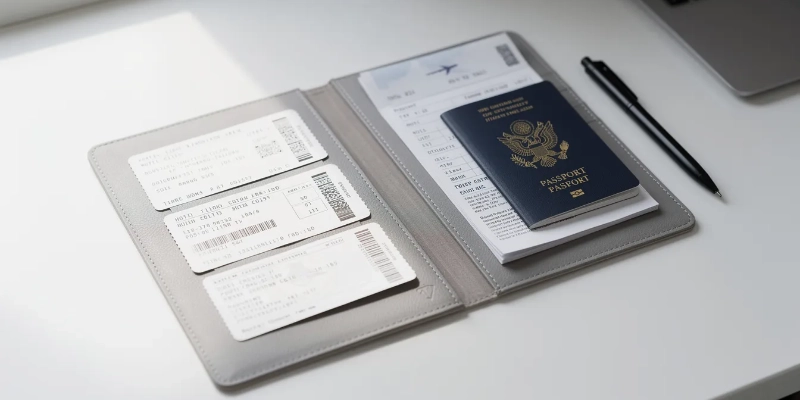
Officers may or may not look at your documents, but you must have them ready and organized. You need your passport, DS-160 confirmation, and financial documents. Bring your passport to the interview. You need the DS-160 confirmation page. An appointment confirmation letter is required for entry to the U.S. embassy. Here's a link to the full process guide's document checklist that you can refer too. In addition to those documents, you should also be prepared to bring in any Medical reports or hospital records if your visa involves any sort of medical treatment services.
You may need documents showing ties to your home country. Keep everything in clear sections or folders so you can quickly find what the officer requests.
Step-by-Step Preparation Plan Before Your B1/B2 Interview
Here's a checklist from two to three weeks before the interview to the day of your appointment.
2–3 weeks before:
-
Review your DS-160 form for accuracy. Fix any errors if still possible.
-
Finalize realistic travel dates based on work, school, or family obligations.
-
Generate a detailed itinerary with flights, hotels, and daily activities.
-
Gather all financial documents: recent bank statements, tax returns, and salary slips.
-
Collect employment or enrollment proof, property documents, and any invitation letter.
1 week before:
-
Practice answering common interview questions to build confidence. Do a mock interview with a friend or family member covering purpose, duration, job, finances, and home ties.
-
Organize documents into labeled sections.
-
Review your travel plan so you can reference cities, dates, and hotel names naturally.
Day before:
-
Print or save all documents digitally.
-
Review dates, costs, and key names one more time.
-
Check your appointment confirmation time and U.S. embassy location.
-
Plan transport so you arrive early.
-
Dress neatly. There's no official dress code, but clean, professional attire shows respect and seriousness.
How Get Itinerary Simplifies Your B1/B2 Interview Documentation
You need flight and hotel proof for your visa interview. But you don't have confirmed bookings yet — and you shouldn't pay for real tickets before you know if your visa is approved.
Get Itinerary solves this problem with QR-verified documents that stay live throughout your entire visa processing period. Each flight itinerary and hotel reservation includes a scannable QR code that links to an active reservation portal — valid until 24 hours before your stated travel date.
This is different from the PNR-based services many applicants use. Those records typically expire in 24 to 72 hours. If your embassy verifies your documents after that window closes, you're presenting dead links.
Our system keeps your reservation record active for weeks or months if needed. The consular officer can scan your QR code during your interview and see a live booking confirmation on their screen.
Important: These are dummy bookings for visa application purposes only. You cannot use them to board a flight or check into a hotel. They exist to satisfy the documentary requirements of your B1/B2 application — nothing more.
Pricing is straightforward: $15 for a flight itinerary, $15 for a hotel reservation, or $25 for both. Additional travellers cost $10 to $20 extra depending on the document type. You receive your verified documents within minutes of ordering.
The Get Itinerary plan works because embassies understand the catch-22 applicants face. They want proof of travel intent without forcing you to risk hundreds or thousands of dollars on non-refundable bookings before visa approval.
Frequently Asked Questions About B1/B2 Visa Interview Questions
These FAQs cover practical tips and concerns that applicants frequently raise beyond what the main sections address. Each answer reflects current 2026 practices and real interview scenarios.
Do I need to book flights and hotels before my B1/B2 visa interview?
Fully paid, non-refundable bookings are not legally required before your visa interview, and many immigration services experts advise against them until your visa is approved. If the visa is refused, you lose your money. However, having at least tentative reservations, sample routes, or a Get Itinerary plan helps answer questions about where you will stay and when you will travel. Flexible or on-hold bookings and printed itineraries are often a safer option that still demonstrates you have done real planning. The key is showing a credible plan, not proving you have already committed financially to non-refundable tickets.
Can I answer in my native language during the interview?
Many consulates conduct interviews in English, but officers at US embassies around the world often support major local languages. Availability depends on the specific consulate and the officer assigned to your case. You should choose the language in which you can answer most clearly and confidently. Clarity and honesty matter more than perfect English grammar, if you struggle to explain your background in English, answering in your native language where the consulate supports it usually serves you better than fumbling through in English.
What if I have very little previous travel history?
Limited previous travel history is not automatically a reason for refusal. Many first-time travelers receive B1 and B2 visas every year. However, you must present especially strong ties to your home country and a realistic, modest first-time itinerary. Emphasize stable employment, family responsibilities, sufficient ties to your community, and clear return plans. A simple, well-organized trip outline from Get Itinerary, showing a reasonable budget and moderate duration, helps demonstrate that your visit to the United States is temporary, low-risk, and well thought out. This can compensate for the lack of travel stamps in your passport.
How soon can I reapply if my B1/B2 visa is refused?
There is usually no mandatory waiting period after a refusal. You can technically reapply the next day. However, reapplying without changing anything, such as your finances, job situation, documentation quality, or travel clarity, often leads to another refusal. The visa requirements have not changed, so submitting the same case produces the same result. Wait until you can address the officer's specific concerns. Gather new evidence, strengthen your financial situation or ties, and prepare stronger documentation and clearer answers. Many applicants find success on a second attempt after meaningfully improving their case and demonstrating that their circumstances have changed. Check the visa validity rules for your country to understand timing.
Will consular officers ask me about my social media or online activity?
DS-160 forms now request certain social media identifiers, and officers can review publicly available online information to check for major inconsistencies with your stated purpose or immigration history. For example, if you tell the officer you plan a two-week vacation but your social media posts discuss job hunting in the US, that contradiction will raise red flags. Be truthful in both your visa application and interview. Avoid online content that suggests you plan to work or stay permanently in the United States on a visitor visa. The best approach is to make sure everything, from your DS-160 to your social media to your spoken answers, tells the same honest, consistent story.
Related Reading
- Top 10 Visa Interview Questions and Best Answers, the 10 questions consular officers actually ask across visa types, what each one is really testing for, and a strong versus weak answer for the ones that trip people up most
- How to Submit a Strong Visa Application, the full application process, documents, DS-160, fees, and cover letter, not just the interview
- How to Get a Flight Reservation for Your Visa, documentation you may be asked to reference during the interview